Friday, December 17, 2010

'Tis the Season ...


December 6th started out with a sense of adventure. My friend, Antje, invited me to go up to New Westminster BC (Canada) to the Holland Shopping Center. Antje, born and raised in Holland until her early teens, wanted to pick up some traditional Dutch holiday things for her family. I had no particular interest in things Dutch, but I’m always up for a roadtrip!

We soon found the shop, teeming with customers! Little did I know that December 5th and 6th was Sinterklaas, which honors the life of St. Nicholas, and people were busily purchasing chocolate letters, marzipan confections, speculaas, kruidnoten, bischopswijn, gingerbread, sausages AND DUTCH CHEESE!

A little side note about St. Nicholas. He was born to wealthy parents in Patara (now part of Turkey) in the third century. He spent his life giving away his money to the poor and doing good deeds. He reportedly had a soft spot for children. Although St. Nicholas is always shown wearing his bishop’s attire, i understand the Dutch tend to see him as a kindly old man rather than a Catholic saint. The result is that Sinterklaas is celebrated by Dutch people of all ages and beliefs, without any real religious connotation. His feast day is observed by exchanging gifts and cookie or chocolate letters (recipient’s initial), making good-natured fun of loved ones with humorous poetry and homemade gag gifts that hide another present inside.

Of course, I was drawn to the cheese cooler, which was abundant with all manner of Dutch cheesiness! Holland is the largest exporter of cheese in the world, with the majority being semi-hard or hard cheeses. Famous Dutch cheeses include Gouda and Edam. A typically Dutch way of making cheese is to blend herbs and spices during the first stages of the production process.

Gouda is a semi-hard cheese with a 48% milk fat content and a mild taste. Aging intensifies the flavor and the hardness. Gouda is usually made in wheels, with a red or yellow paraffin coating, unless it has been aged for 12 – 18 months, in which case, it will have a black wax coating.

Edam is also a semi-hard cheese with a fat content of 28-40% and a very mellow, salty or nutty taste. As it ages, its flavor sharpens and it becomes firmer. This cheese is usually spherical with a red wax coating. Mild Edam pairs well with fruit such as peaches, melons, apricots and cherries. Aged Edam is often served with pears and apples. Because of the season, dried fruits also pair well with this cheese.
There are other Dutch cheeses such as Maasdammer, farmstead, goat’s cheese, smoked cheese, Leidse, Dutch blue cheese, herb cheese; and all were represented at Holland Shopping Center. It was very tempting, but I remembered that Pleasant Valley Dairy in Ferndale, just 6 miles from my home, made their own Dutch-style Gouda.
Whenever possible I buy locally to contribute to my local economy and support my local businesses, so I decided to forego buying any Dutch cheese that trip.


Antje and I paid for our purchases—mine were Dutch chocolates and cookies for Christmas gift to Anneke, another Dutch friend—and after Antje had fun gibberjabbering in Dutch with the clerk, we bid 'Doei!' to the little Dutch shop in New Westminster.


Within a week, I was pulling up to the cheese store at Pleasant Valley Dairy. I spoke with Mattie Snook, who along with her mother Joyce, now operate the cheesemaking and selling. Joyce is the cheesemaker. The farm has been in the family for three generations making raw cow’s milk cheeses.
I asked her specifically about Nokkelost, which is a Gouda cheese they started making about ten years ago exclusively for Everybody’s Store in Van Zandt, WA. They have an agreement enabling them to sell Nokkelost through the dairy store, too.
Imagine my surprise, when Mattie said Nokkelost wasn’t a Dutch Gouda, but a Norwegian Gouda with cumin, caraway and cloves. Oops! My background is Norwegian, so it worked out even better from my perspective!
Other than Mutschli, which is a Swiss style cheese, their Gouda is crafted after the Dutch way of cheesemaking and I’ve enjoyed many of their variations:
Farmstead

Mutschli (great for fondue!)

Raw Milk Applewood Smoked Cheese (I think they have their own on-site smoker)

Gouda with Fine Herbs

Gouda with Peppercorn

Gouda with Cumin

Gouda with jalapeno

A new one they’re just offering now is basil Gouda. If you like basil, this is the cheese for you!
All of their cheese is made from whole raw milk, bacterial culture, salt and natural rennet and is aged over 60 days, with older, sharper Gouda available. Joyce makes their cheese in 2-lb and 6-lb wheels. They sell by the wheel, or sliced! They also will ship wheels of cheese for you—great for gift giving!
Other than their farm store and Everybody’s, some of their cheeses are also sold at Quel Fromage in Fairhaven, and I think Beecher’s in Seattle still carries Pleasant Valley Farm cheeses.
Pleasant Valley Farms is on Facebook, so get on their list and you’ll find out about new cheese, and what is available when, and all sorts of good stuff!

A little generally about Gouda:
Exported Gouda is typically a young variety aged from 1-6 months, with a red or yellow wax coating. Old Gouda, aged 12-18 months is denoted by a black paraffin coating. If you specifically want Dutch Gouda, look for Noord-Hollandse Gouda, the cheese registered in the EU as a Protected Designation of Origin.
Unopened Gouda in wax could remain stable in a refrigerator for up to one year. Once opened, take out only what you’re going to use and wrap the rest in an airtight plastic bag or foil. Refrigerate and eat within one month.
Semi-soft Gouda is delicious served as a table cheese or a dessert cheese. In Europe, Gouda is a popular breakfast served along with fresh fruit. Later in the day, Gouda is paired well with dark-grained breads and beer, or full-bodied wines such as Chardonnay or Syrah. Gouda is also ideal for grating and melting. Swap it for Cheddar in your usual macaroni and cheese. For an authentic Gouda dish, make a Dutch fondue (kaasdoop). Melt grated Gouda with milk and a touch of brandy and nutmeg, and serve with roasted potatoes and chunks of rye bread.
I really enjoy the taste of the herbs in the Nokkelost! And the Mutschli is very smooth in taste and texture.

With Mattie wrapping up of some delicious local cheese for me to take home and enjoy, so wrapped up my Sinterklaas roadtrip.


Vrolijk kerstfeest (Dutch)
God Jul (Norwegian)

Merry Christmas!


Pleasant Valley Dairy (Joyce and Mattie Snook)

6804 Kickerville Road, Ferndale, WA 98248

360-366-5398


Everybody’s Store

5465 Potter Road, Deming, WA 98244

360-592-2297

www.everybodys.com


Quel Fromage

1200 Old Fairhaven Parkway Suite 101

Bellingham, WA 98225

(360) 671-0203

www.quelfromage.com

Sunday, December 12, 2010

More About Gothberg Farms ...


A mountain high list of to-dos has kept me from finishing off my article about Gothberg Farms' delicious assortment of goat cheeses. However, I was online with some research, and unexpectedly came across the following recipe. It is the perfect thing to get back into the article and wrap ‘er up!

I haven’t—yet—personally made this recipe, but I have enough chevre to make it tonight for dinner. It looks like it would be delish!

Art Smith’s Goat Cheese Drop Biscuits

I read that these biscuits are served to diners at Art Smith’s Chicago restaurant, Table Fifty-Two.

Makes 12 biscuits

2 cups self-rising flour
1 teaspoon salt
4 tablespoons (2 ounces) cold butter
4 tablespoons (2 ounces) goat cheese
1 cup (8 ounces) buttermilk
Extra butter to grease pan and top biscuits
¼ cup grated Parmesan cheese

Preheat oven to 425. Place one 10-inch cast iron pan into the oven while it is preheating. Place flour and salt into a medium-size bowl. Cut in the butter and goat cheese. Make a well in the middle of the ingredients and pour in the milk. Stir until the mix is moistened, adding an extra tablespoon of milk, if needed.

Remove the hot skillet from the oven and place a tablespoon of butter into it. When the butter has melted, drop ¼ cupfuls of batter into the pan. Brush the tops of the biscuits with melted butter. Bake from 14-16 minutes until browned on the top and bottom. Remove from the oven and sprinkle with freshly grated Parmesan cheese. Enjoy them while they’re warm!

Doesn’t that sound tasty?


But, more specifically back to Gothberg Farms. Since first getting my hands on a sampling of Rhonda’s goat cheeses, I’ve used them in a number of recipes. There are a couple cheeses I haven’t yet sunk my teeth into, and Rhonda seems to keep coming up with new cheese delights. The latest that I’m aware of is a cheesecake they’re making right there at the farm. Who doesn’t love cheesecake?!!!

I’m including some photographs of the farm and “the LaMancha ladies” from this summer. The photo of Rhonda was taken at her booth at the Anacortes Farmers Market in September.

I paired the Gothberg Caprino Romano with salsa and chips, which I heartily recommend. Rose, one of the ladies in our office makes the salsa from scratch, which I also heartily recommend for total taste explosion. I also cut up what I had left over and dropped it into a steaming hot bowl of homemade Italian minestrone. Lovely!

I enjoyed melting the Caerphilly in a grilled cheese sandwich. I also dropped little chunks of it into some chili I made. Loved it.

The fresh chevre was heavenly with the fresh summer peaches and blueberries! And of course, it is a wonderful addition to a salad anytime. It was really helpful to find out I could freeze the chevre and thaw it out later. I’ve now done that twice and have been pleased that the cheese retains its smooth texture and taste, although I did like it best fresh.

The ricotta I tried with cantaloupe, kiwi and cherries and I loved it! I also used some of the ricotta in an Italian pasta dish I whipped up one night for dinner.

Speaking of ricotta. Here is a photograph of some cookies made specifically for Gothberg Farms by The Breadfarm, using Rhonda’s ricotta. The cookies were a very nice addition to my afternoon tea.


It just shows you can’t miss with ANY of the Gothberg Farms cheeses.

Although the farmers markets are finished for the season, you can still purchase Gothberg Farms cheese at their farm on Saturdays from 10 am to 2 pm. They’re located at 15203 Sunset Road, Bow WA 98232 (360) 202-2436, at Terra Organica and Bargainica at 1520 Cornwall Avenue, Suite 101, Bellingham (360) 715-8020, and at Slough Food at 5766 Cains Court, Suite B, Edison 98232.

My recommendation would be to make it a road trip by dropping by Gothberg Farms, Slough Food and the Breadfarm in Bow-Edison. John, owner of Slough Food, has some lovely wine selections and an international assortment of cheese, plus other foodie goodies; and the Breadfarm is in the same building (360) 766-4065, so MUST stop in there, too! You will be ever so glad that you made the road trip!

I’ve had a wonderful time getting to know Rhonda and learning about her operation, and meeting her very personable goats. Rhonda exemplifies the attitude I’ve found among artisan cheesemakers. Cheesemaking is so much more than a livelihood; it’s a passion, a way of life, with a high regard and affection for their milk-producing animals, and an ever-prevailing ethic to provide the best quality product to their patrons.

Thank you, Rhonda and staff at Gothberg Farms!


Friday, October 8, 2010

Comfort food and cheese save the day!


Today I was working on another article about the LaMancha goats and the great cheese Rhonda Gothberg is making at Gothberg Farms in Bow, WA, but it’s not finished and I got hungry.

It was a drizzly, chilly day and I was in extreme need of comfort food. My little tomatoes are nowhere near using for cream of tomato soup, so I flung open my pantry and cast about for something feel good. I reached for a container of organic cream of tomato soup that had been awaiting this very day.


I heated it, and put it in a pretty Bettye Barclay bowl. For me, an indispensable part of the enjoyment is presentation and the bowl Bettye made was lovely to look upon and it reminded me of great times with that artist.

So, I was ready to spoon away, but I knew it was missing something.

I had already finished off a small but delicious wedge of Gothberg Raw Caprino Romano, which would have been such a nice addition to the soup. Gone. Even a dollop of her Greek Style Yogurt would have been marvelous. Gone. Her Woman of LaMancha would have been perfection! Didn’t have any.

However, I did have a little bit of Garcia Baquero winey goat cheese. I immediately grated it and tossed it into the creamy soup, topped off with a Spanish olive.
Ay Carumba! It really hit the spot! I was comforted. I was warmed. My mouth was happy. I heartily recommend grating whatever cheese you have into soup. And we are definitely entering Soup Season!

So, let me tell you the very little I know about Garcia Baquero Winey Goat Cheese. Garcia Baquero is the major producer of Manchego cheese in Spain. However, that cheese is made with sheep’s milk, and is aged anywhere from 3-9 months, or longer.

Winey Goat Cheese, made with 100% goat’s milk is very similar to Manchego in its fine salty sharpness and wonderful finish, but there is a slight taste difference … not better or worse … just different. It, too, is a semi-firm cheese that has been aged, but I couldn’t find out for how long. I did find out that part of its distinction is that it was soaked in red wine.

Garcia Baquero has been distributed in the USA since 2008 by Norseland, Inc.

So, when you’re putting together a Spanish cheese board, remember to include some Winey Goat Cheese. It pairs well with cured meats and autumn fruits and goes well with Rioja or Tawny Port.
The Market at Birch Bay

Sunday, October 3, 2010

Inspiration--and more--found at Gothberg Farms ...


About a year ago I acquired a copy of “Artisan Cheese of the Pacific Northwest” by Tami Parr, and quickly browsed through the list to see what cheesemakers were in my neck of the woods. I love driving down to La Conner to wander through the galleries and see what’s what at the Museum of Northwest Art, so I was delighted to see that Gothberg Farms in Bow, about an hour’s drive from Birch Bay, was right along my route to La Conner. I didn’t make immediate contact, but I found Gothberg Farms on Facebook and have been following Rhonda’s activities.

I was intrigued not only with what Rhonda has been doing with her cheese and how she’s continually developing delicious new magic with her goats’ milk, but also with the compliments and loving that are consistently posted on her FB page. I wanted to meet this woman who I knew was going to be amazing even before I met her!

Opportunity smiled on me when this summer Rhonda had a couple of hours open up at the same time I had available, so I whipped down to Bow-Edison and we finally met. I was not disappointed. She is every bit as friendly and encouraging and amazing as I had anticipated!

She warmly greeted me with her faint Texan drawl and I was immediately shown the milking room, shown where they transform the milk into cheese, the 52-gal pasteurizer, the coolers, the “cave” (a converted refrigerator trailer) where some of the cheese is aged—everything was soooooo squeaky clean and orderly!


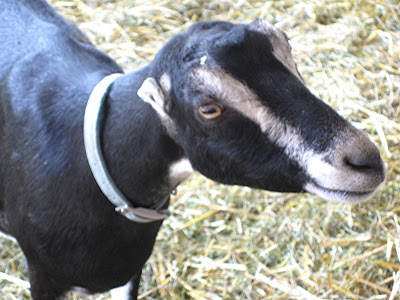
Then we went into the barn and I met the purebred LaMancha goats responsible for the great milk that ends up as great cheese. (Did I mention that everything was spotless and smelled sweet and fresh—in the barn, I tell ya!) Each of the does has a name and her own personality and all were curious. They were quite personable and friendly. I couldn’t help myself; I had to smile at all those cute faces.

Parr wrote in her book, “After a career as a nurse executive, Rhonda Gothberg was ready for something else. ‘I wanted a family goat for a little home milk, a few chickens, a little home cheese,’ she laughs.’ One mother-baby goat pair turned into several more and several more … and now Gothberg finds herself with a milking herd of 14 LaMancha goats, along with a thriving cheesemaking business. She’s the kind of person whose energy and enthusiasm leave little doubt that she’d be successful at whatever she put her mind to.”

Rhonda was not at all boastful of her accomplishments, and made frequent reference to her family, staff, friends and neighbors in helping her to make it all possible.

Rhonda had been a Realtor before becoming a cheesemaker, and so looked around Skagit Valley for just the right farm before she and her husband Roy found and bought the dilapidated 40-acre cow dairy farm in Bow. Over the years, with a lot of sweat equity and not a little inconvenience, they’ve rebuilt the house and the renovated the old cow barn, and have since built a new barns for the does, and bucks.

One thing quickly led to another and in 2004 Gothberg Farms became a licensed Grade A goat milk microdairy. Rhonda has been marketing her cheese for only seven years, but has made a name for herself. She has it down to a science, folks! This woman knows responsibility and accountability!

Not only has she grown her dairy and makes great cheese 3-4 days a week with the help of her staff of loyal and knowledgeable ladies, she also gets involved in her community.


She mentors other aspiring cheesemakers, answering questions, making recommendations based on what she had researched and learned firsthand.

Because it’s important to Rhonda to provide the best for her goats, she researched the best feed for her herd, and convinced Conway Feed to custom mix a grain ration to her specifications. This augments the high-quality Eastern WA alfalfa hay and Skagit Valley pea hay. Conway Feed now offers the Gothberg blend to other feed customers, as well.

Rhonda supports the efforts of 4H kids in her community. She speaks at various workshops and seminars. She gets involved with and sells at farmers markets in Everett, Anacortes, Mt. Vernon and Bellingham. She participates in community causes, dinners, and farm/cheese tours. She keeps current an informative and folksy website, frequently updates Facebook, and Twitters! She's involved in sustainability causes and is knowledgeable about animal husbandry and food industry regulations.

She collaborates with Slough Food where you can choose from Gothberg Farms finest cheeses among a global assortment, and John will recommend just the right wine to pair with your choice of cheese. Breadfarm uses Gothberg Farms cheese in one of their rustic country loaves, and Skagit Co-op is another retail source for her cheese. Gothberg cheese is featured on the menus of a number of local restaurants, including Adrift in Anacortes, The Rhododendron Café in Bow, and Nell Thorn in LaConner. Metropolitan Market in Seattle also retails her cheese.

Since Rhonda uses only the milk of her own herd of 20 or so LaManchas to make Gothberg cheese, I wondered what those restaurants did during the winter when the does are dry and fresh cheese is no longer available. Rhonda said they stock up on the chevre in the summer and freeze it.

I was quite the skeptic, but I froze some of her chevre and about a month later let it defrost to room temperature and it was creamy and tasteful and I couldn’t really discern the difference in taste or texture from fresh! Interesting tidbit to know!

In this article, I wanted to highlight Rhonda and how she got started as a cheesemaker. I’ve discovered that quite a few artisan cheesemakers had successful careers as something else, but at some point decided to take a different road.


For all of Rhonda's obvious efficiency and capability, I was moved most by her statement on her website, "It is still magic to me every time the milk turns to curd! I love the entire process, from goats, to kidding, to milking, and cheesemaking. This is a lifestyle change which is most welcome and most rewarding."

As an aside, although Rhonda's passion is artisan cheese, she still has her Realtor license and with her intimate knowledge of the Skagit Valley, she is willing to help folks buy just the right place. If she's in the midst of something and can't assist you herself, she'll put you in touch with someone she knows and trusts will serve your real estate needs; she's that kind of gal!
It amazes me how she finds time for everything!

Next time I’ll share more about Gothberg Farms goats and their wonderful cheese! Yum!

However, I can’t wait until then to share the following recipe I lifted from the Breadfarm website:

CHEF DREW’S GOAT CHEESE SPREAD

This recipe was created by our good friend Drew Jackson. After he made it for several dinner parties, we finally asked for the recipe. We love it made with Rhonda Gothberg’s fresh Chevre. Made right down the road from Breadfarm, it is quite frankly the best cheese around!
½# Gothberg Farms Fresh Chevre (or other goat cheese)
½# unsalted butter (at room temperature)
4T shallots, minced
Salt & Pepper, to taste


Puree goat cheese and butter in a food processor. Add shallots, salt and pepper and whip to combine. Refrigerate until ready to use. Serve with crostini or toast points.

Enjoy!


Slough Food
5766 Cains Court Suite B, Edison, WA
http://www.sloughfood.com/

Breadfarm
5766 Cains Court, Edison, WA
http://www.breadfarm.com/

Adrift Restaurant
510 Commercial Ave., Anacortes WA 98221
http://www.adriftrestaurant.com/

Sunday, July 18, 2010

Good ol' Fashioned Community ...


I thoroughly relish how ideas unfold in the ripeness of time. I’m off on a tangent today, and won’t be chattering about cheese, per se.

I was channel surfing last night and happened upon a showing of the documentary “FOOD, Inc.” on the Public Television channel.
When it came out about a year or so ago, I was aware of it and the brouhaha it created. There was a lot of dialog; people were a-buzz over the revelations about corporate food industry and its unsettling impact on our way of life, on our health, on our choices, even on our perceived freedom. You know how Americans are about their freedom! But, I did not go see the documentary then.
I am grateful that I happened upon it last night. The ramifications are chilling, to say the least. I’m all for capitalism, every business should be able to be competitive and make a profit. It’s when business loses sight of ethics and makes choices that are counter to the local and global common good, in cut-throat/take no prisoners pursuance of profit to shareholders and strong-arm litigation and political leveraging, that makes me wonder what can be done by little ol’ me.
Other than my indignation over what the exposé shed light on, it started a train of thought about what’s being sold and bought in supermarkets, convenience at the expense of health, extraordinary corporate farming dependence upon petroleum products that enables the convenience in the supermarket, family farms and independents being forced out of the marketplace; the legal and political clout of behemoth food industry corporations, and why it makes a difference to me.
It’s frightening to think that a very few mega-corporations have maneuvered such control over our food sources, that if something went wrong with their engineered/cloned foods, there would not be anything else to fall back on. If they are systematically eliminating competition, we would have no other choices. This could have global consequences. We must preserve and support our local food sources. There’s a glaring and appalling imbalance.
There is more at stake than profit and convenience.
That got me thinking about local farmers, about local farmer markets, and my own interest in artisanal and farmstead cheeses.
The political buzzword these days seems to be “transparency.” I’m interested in these farms and creameries because there’s a face-to-face component that appeals to me. I know the cheesemaker. I know the area of the farm or creamery. I can talk to them. In some cases, I know their families and even the names of some the goats or cows. There’s accountability and accessibility. I know what they put in their cheese. In some places, I can even watch how they make my food.
It’s comforting and reassuring to know there are local sources for the salad greens I eat, for the yogurt and cheese and butter I eat, for the raspberries—oh baby, has there been a delicious crop of raspberries here this year at Boxx Berries—you get the picture.
But it’s more than a personal feel-good situation. If we don’t all in some way or another support our local food sources, they will continue to shrink and disappear … and then we’ll have nothing. It’s chilling to see the rapidly declining farmland in just Whatcom County alone (2007 Census of Agriculture: in 2002 there were 148,027 acres of farmland. In 2007 there were 102,584 acres of farmland. About 30% LESS!) Sustainability takes a community to make it happen. Also, when you buy locally, it benefits locally. Local farmers spent their profits at local service providers, so those revenues go to local public services and road maintenance and schools, etc., which benefit you and me.
It’s more than just supporting our local farmers. It’s also demanding accountability for the food being sold in supermarkets and mega-stores. Demand labeling so you know if your meat is shipped in from out of the country, contact your local political representatives and tell them you want to know if the food you’re eating is cloned or genetically altered. Don’t stand for the mega-producers legally preventing the consumer from making complaints or even questioning the way our food is produced. You DO have the power and the right to know what you’re eating and where it came from. Exercise that right. You don’t have to stand on a soapbox and shout expletives of anger and rage; just calmly send an e-mail or a Tweet to your congressmen and state representatives. There is strength in numbers! You plus me, plus Ann, plus Bill, plus … we count!
Educate yourselves! What is more vital than our source of food?
I came across the following web blog from Rainbeau Ridge, a farm in New York. Now, admittedly, New York is hardly local for us here in Birch Bay, but I like what Lisa Schwartz has to say in her blog. (Read her background. She was a management consultant who, in her fifties opted to change direction. In view of her passion for eating and sustainability, she bought her first pair of goats in 2003 and now has a thriving farm, supported by her community. She also has written a book. You can read more about her on her website.)
I like what she says because I feel that same local pride, a sense of community, a connectedness with the land and seriously, I think more people are feeling the same way.

RAINBEAU RIDGE WEB BLOG
http://www.rainbeauridge.com/
April 13, 2010
The Ties that Bind Us
The ties that bind us are sometimes impossible to explain. They connect us even after it seems like the ties should be broken. Some bonds defy distance and time and logic; Because some ties are simply... meant to be.
Grey’s Anatomy closing line episode 508

Much as I hate needing my car to get just about everywhere around here, I love a long, solitary drive. For me it’s think time.

Today I was thinking about ‘ties that bind us’ when I heard Neil Diamond singing Sweet Caroline at the Red Sox game, broadcast on the music station I was listening to. Not being a Diamond fan (no goats named in his honor!) nor a fan of the song, I found myself sporting a big, goofy smile as I listened to his rendition, voice scratchy with age and cigarettes(?), as the fans chimed in with the oh oh oh and “so good, so good” chants. For a few minutes, people of all persuasions came together for the silliest of songs, the connection to the game completely escapes me- but who cares—they’re having fun, all smiles and part of a community. In fact being amongst fans at a baseball game (assuming you have no interlopers from the opposing team) may be one of the few places these days where people enjoy being with others, regardless of politics, views on climate change or healthcare or anything else that matters.

Another venue that celebrates community is at Rainbeau Ridge on CAP pick up day—where our members come to shop for their weekly produce, eggs, cheese and other goodies. In this case, the ties that bind are more obvious. Some are confirmed locavores, others are just trying to find a way to connect to their food—the core of all who come to the farm share common ties of joy and interest in fresh and delicious food-- and it is palpable. The enthusiasm of each and every visitor feeds my soul—their happiness in being a part of CAP, the shopping and farm experience, meeting of neighbors and greeting new friends as connections are made, recipes traded—it’s such good ol’ fashioned community and I’m delighted and energized by what has emerged.”

So, that’s about it for today. Not too cheesy, I admit. But it’s what was on my mind. I have to go to Grace Harbor Goat Farm and buy some goat yogurt. It goes fabulously with the Boxx Berries raspberries. If my timing is right, they might even have some fresh chevre!

I’ll be back with cheese soon!

Tuesday, June 22, 2010

Huntsman Double Delight ...


Summer has been slow out of the gate this year in Birch Bay, WA. June has been uncharacteristically overcast, with periodic showers. It was on such a gloomy morning that I found myself in the cheese department, cheered by the sunshine yellow cheeses; little suns smiling up at me.

A visually attractive cheese piqued my eye and curiosity. Huntsman is a relatively modern combining of two English classics. It’s a Double Gloucester (cheddar) combined in alternating layers with Stilton (blue cheese). It’s layered by hand in a very complex labor-intensive process. Huntsman is a trademarked name of Long Clawson Dairy in England, but I’ve learned there are many imitations in the marketplace, including Stilchester. All of them are imported from England.

Huntsman is made with whole cow’s milk. Its name supposedly touts the region’s hunting tradition. Long Clawson Dairy was founded in 1911 when twelve farmers from the Vale of Belvoir, Leicestershire formed a co-operative to produce Stilton cheese in the village of Long Clawson. They now make 30 cheeses, including many innovative blended cheeses.

I love blue cheese and equally love cheddar, so imagine my delight in a cheese that combines the two! This double treat has the savory cheddar-like base Double Gloucester with a layer of creamy sharp, full-flavored Blue Stilton infused through the center. Some of the products made by others have multiple layering.


Because of the layering of the cheese, I would rather use it on a cheeseboard or as a snack or appetizer. However, it would be tasty on a grilled steak or a grilled hamburger with bacon. Yum! Have you ever tried a blue cheese on steak or a burger? Superlative taste experience!

I was at a loss for something quick for an early dinner, until I remembered the humble wedge of Huntsman waiting for me in the refrigerator.

I didn’t have a steak or burger to grill, so I simply sliced the Huntsman—both cheeses are pretty easy to cut—and paired it with quince paste, on a buttery multigrain cracker. The understated sweetness of the quince was a lovely counter to the savory and sharp cheeses. Oh baby! It was heavenly.

I read that it also goes well with chutney, and is often an alternative to traditional cheddar on a Ploughman Platter:

2 slices of fresh, crusty bread
1 Tbsp of Branston pickle
Half an apple, sliced
2 sticks of sliced celery
2 picked onions
1 sliced tomato
2 slices of Huntsman


I just came across this recipe for blue cheese, but I know it would be superlative with Huntsman:

Slice a French loaf or a hoagie or po’ boy bun in half, cover with pizza sauce and top with a mixture of chopped onions, mushrooms, tomato slice and Huntsman. Place it under the grill for five minutes and enjoy a warm, melty piece of heaven. Oh, I wish I had fixed that! De-lish!

I’m a white wine gal, so I enjoyed my simple repast with a crisp sauvignon blanc. However, I read that most frequently the recommendation is to pair this cheese with a Pinot Noir, Shiraz, Port, or other red wine. I understand it also goes well with just about any kind of beer or ale.

The recommended shelf life of Huntsman cheese is about 45 days. Just make certain you tightly wrap any leftover cheese in a fresh plastic or foil wrap, and store it in the warmest area of the refrigerator. For best flavor, remember to bring it to room temperature to eat it.

My recommendation? Try it! I’ll wager you’ll find there won’t be anything left to worry yourself about a shelf life!


Wednesday, June 2, 2010

The hunt was on for cheese! Any cheese, please!


Rummaging, I was, through the refrigerator searching for cheese; any cheese! I couldn’t find a single morsel. Nothing behind the half-full bottle of Sun Luck oyster sauce, nothing behind the mayo, nothing under the celery or the bok choy, nothing on the other side of the box of butter.

My anticipation was rapidly fading.

Wait! What’s that? I recognize that wrapping! Quel Fromage! What, oh what had I pushed all the way to the back of the top shelf and forgotten? More importantly, was it still edible or had it become just another moldy science project?

Lordy! Lordy! A wee bit of cave-aged Gruyère! Thanks be to the good god of all that is cheese!

I remember having used most of the originally purchased wedge in a 3-cheese sauce for macaroni, but with a shy ¼-cup of Gruyère left, there wasn’t enough for a sauce.

Gruyère is one of the firm raw cow’s milk cheeses of Switzerland that crumbles readily, but is well known for its superb melting capability. It’s the basis for any good Swiss fondue, and is preferred for au gratin onion soups. But I didn’t have enough for such.

The only recourse was to simply open my mouth and savor and enjoy each sliver and crumble. And enjoy it I did!

Because of the aging in a cave for at least 6 to 13 months to, in some cases, 3 years, and the process of washing the wheels of cheese, the taste of this Swiss cheese is more intense, more complex than some other Swiss cheeses. And especially more flavorful than most Swiss cheeses bricks and slices found in the supermarket.

I felt it stood on its own merit by eating it, rather than including it in a sauce—it was delicious! I love the words used by Sam Gugino, in the September 2008 issue of Wine Spectator magazine: “…a rich mouthfeel and a long finish.”

I didn’t eat it with crackers or apple slices because the taste was ever so slightly salty with a hint of sharp, and musty, and a complexity because of the aging, that I didn’t want to be distracted by any other taste.

In The Cheese Plate, authors McCalman and Gibbons say, “… one of the best things about Gruyère is that it’s salty on the attack but not on the finish.” I totally agree!

I did learn that a very good American Gruyère is made by the Swiss family, Wisconsin-based company Roth Kase.

Amazing the taste power in that slightly less than ¼-cup of Gruyère.